
About me
| Dieter Schmalstieg is Alexander von Humboldt Professor of Visual Computing at the University of Stuttgart, Germany. He is also an adjunct professor at the Institute of Visual Computing at Graz University of Technology, Austria. His current research interests are augmented reality, virtual reality, computer graphics, visualization and human-computer interaction. He received Dipl.-Ing. (1993), Dr. techn. (1997) and Habilitation (2001) from Vienna University of Technology. He is author and co-author of over 400 peer-reviewed scientific publications with over 30,000 citations and over twenty best paper awards and nominations. His current and past organizational roles include associate editor in chief of IEEE Transactions on Visualization and Computer Graphics, associate editor of Frontiers in Robotics and AI, member of the steering committee of the IEEE International Symposium on Mixed and Augmented Reality, chair of the EUROGRAPHICS working group on Virtual Environments, and key researcher of the K-Plus Competence Centers VRVis (Vienna) and Know-Center (Graz). In 2002, he received the START career award presented by the Austrian Science Fund. In 2008, he founded the Christian Doppler Laboratory for Handheld Augmented Reality. In 2012, he received the IEEE Virtual Reality technical achievement award, and, in 2020, the IEEE ISMAR Career Impact Award. He was elected as Fellow of IEEE, as a member of the Young Curia of the Austrian Academy of Sciences, the Academia Europaea, and the IEEE VGTC Virtual Reality Academy. | 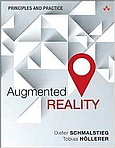 |
Team
VISUS, University of Stuttgart ——– Institute of Visual Computing, Graz
Current research areas
Semantic Scene Graphs
This research focuses interfaces for augmented reality that rely on semantic scene graphs and other techniques providec by AI agents. With the help of scene understanding, a semantic model of the user's physical environment is created and used to deliver situated visualization and guidance. 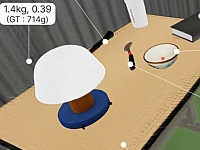 SnapPhysics: A Physics-Aware Scene Graph from a Single View for Interactive Mixed Reality Scenes | 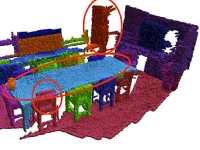 Think While You Map: Asynchronous Vision-Language Agents for Incremental 3D Scene Graphs | 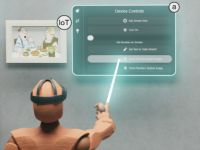 Semantic Scene Graphs for Creating a Localization-Ready Internet of Things |
Real-time graphics
This research focuses on scalable graphics algorithms for rendering large and complex scenes at real-time frame rates. We investigate novel approaches to techniques such as level of detail, image-based rendering, potentially visible sets, frame extrapolation and geometry compression. We are particularly interested in rendering methods suitable for streaming rendering and virtual reality displays. 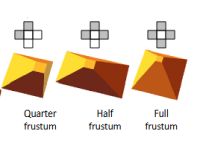 Disocclusion buffer for potentially visible sets | 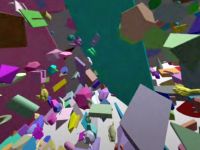 NeuralPVS for potentially visible set prediction | 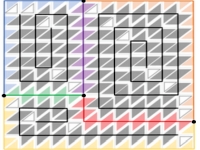 Laced wires for geometry decompression on GPU |
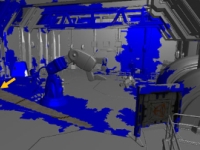 Trim regions for potentially visible set generation | 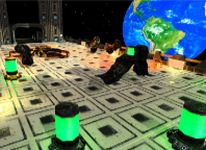 Temporally adaptive shading atlas for incremental shading | 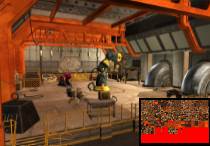 Shading atlas streaming for virtual reality rendering |
Situated visualizations
Situted visualization uses augmented reality displays to present information to a human user that is dynamically derived from the user's physical environment. It provides guidance, instructions and context in everyday situations. We investigate when, where and how to visualize such information, and what information to visualize. 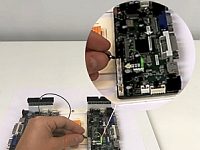 Magnification Lenses for Small-Scale Augmented Reality Instructions | 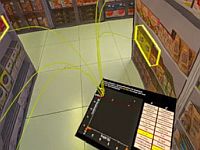 Situated Brushing and Linking in VR and AR | 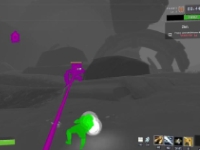 CECILIA: embedding visualizations in existing games |
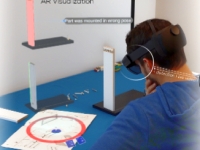 AR assembly guidance with error management | 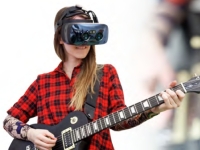 guitARhero: augmented reality for guitar learning | 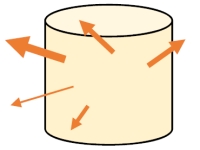 AR visualization patterns for reusable situated visualizations |
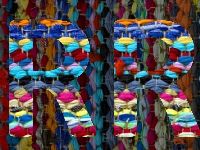 RagRug: a unified development framework for situated analytics |
Photorealistic augmented reality
Ideally, virtual objects displayed in augmented reality would be indistinguishable from real objects. This grand challenge requires capturing the entire image formation process in reality and simulating the virtual counterpart. It encompasses reality capture, light transport, camera simulation and much more. 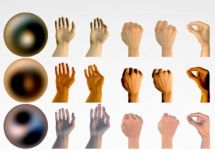 HandLight | 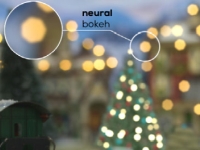 Neural Bokeh |  Learning lightprobes |
Image-based modeling and rendering
Capturing the geometry and appearance of the real world and novel view sythesis from images is a key technique for compelling extended reality techniques, such as telepresence or mediated reality. In this work, we investigate emerging scene representations, such as light fields and radiance fields. 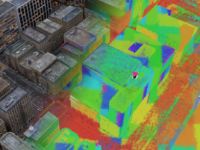 A LoD of Gaussians | 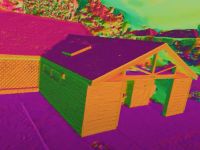 Sorted Opacity Fields | 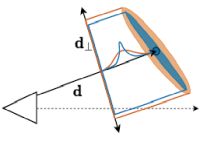 AAA Gaussians |
 VR Photo Inpainting |  Good Keyframes to Inpaint |  InpaintFusion: RGB-D Inpainting |
 MR Light Fields |
3D reconstruction and authoring
Augmented reality applications require new types of multimedia content to deliver convincing instructions and guidance. This content is generated using techniques in the area of semantic and parameterized reconstruction combined with procedural and computer-assisted 3D authoring. 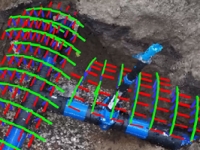 Subsurface infrastructure reconstruction |  AuthXR: An immersive authoring system for industrial procedures |  IntelliCap: Intelligent Guidance for Consistent View Sampling |
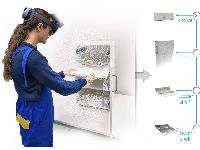 Model-Free Authoring by Demonstration of Assembly Instructions | 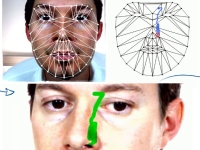 Authoring of AR surface instructions | 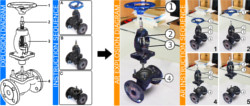 Technical documentation retargeting to AR |
Localization and tracking
Wide-area localization and tracking is key enabling technology for augmented reality. Our research investigates scalable scene descriptors, sensor fusion, and multimodal localization techniques. 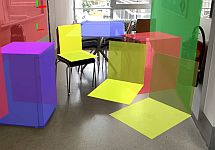 Change-Resilient Localization |  Bag of Wor(l)d Anchors | 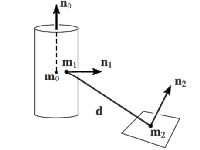 Compact World Anchors |
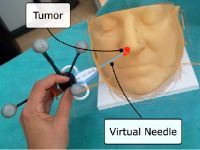 HoloLens stereo tracking | 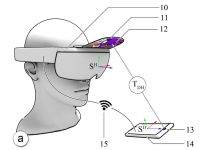 TrackCap | 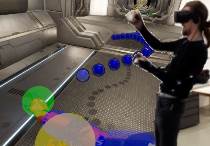 VR Upper Body Pose |
Immersive displays
Conventional XR displays generate only certain types of depth cues and fall short of a hypothetical ultimate display. Our research on immersive display technology improves some of the limitations of existing XR display technology using light field approximation and focal cue synthesis. 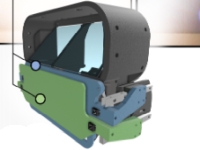 Gaze-Contingent Layered Optical See Through | 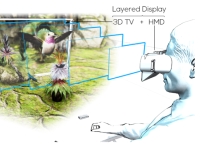 Off-Axis Layered See-Through Head Mounted Display | 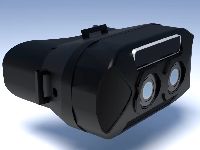 Video See Through Display with Focal Cues |